Boudewyn van Oort
About the Author
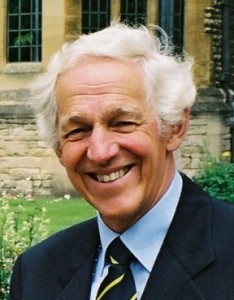
Boudewyn van Oort was born in South Africa, and after the war was educated in South Africa and Canada (Carleton University, Geology). A Rhodes Scholar, he studied Politics, Philosophy and Economics at Oxford, subsequently pursuing an engineering career in the oil and gas industry. Now retired, he lives in Victoria with his wife and daughter. Without extensive research to describe the social and political environment in which this family tale unfolded, the tale would have made no sense. The author was assisted in this task, not only by friends who shared these experiences, but also by historians and archivists in South Africa, Australia, the Netherlands and England. Japanese war diaries were consulted and translated
Comments from readers of his book Tjideng Reunion
A BC Book World
“His superbly detailed but non-inflammatory memoir of two Dutch families who move from South Africa to the Netherland East Indies (now Indonesia), only to become victims of Japanese occupation during World War II, is sophisticated and well-researched investigation into internment camps in Bandoeng and Batavia (now called Jakarta), and the remarkable post-war reunions that eventually brought his parents to British Columbia.”
Peter Teutscher, HongKong Aug 2008
“I’m actually only up to page 108 of the book, but I feel compelled to write to you already to express my gratitude to you for writing such a fine piece. I very much appreciate the effort you have gone to include in your book the global events that surrounded you and your family, so that your experiences could be seen in context of what was unfolding around you. Your book is very readable, very informative, very descriptive, pleasingly accurate, and is exactly the glimpse into my father’s life that I was hoping for.
I could not ask for more Boudewyn. To me, the intrinsic value of your effort is inestimable. I appreciate all the effort you have gone to, all the obstacles you have overcome, and all the times you have, no doubt, resisted the urge to abandon this valuable project.”
Dr R.W. Durie, Victoria (2008)
“I very much like the style in which you interweave the dialogue between your parents and others with the political and historic events of the time. One is subtly drawn into the unfolding horror and the tragedy of that conflict”
Marc Gaudry, 2021, Paris
“Recherche du temps retrouvé, de la petite et grande histoire”
Sir Colin Lucas, Rhodes House, Oxford
“I have found it a fascinating read, both for its easy style and for the insights into that particular experience”.
Karl Benink March 2010, California
“Ik kan gewoonweg niet ophouden met het lezen van jouw boek. Een enorm aantal gegevens en feiten waar ik raar van sta te kijken. Fantastisch en zo duidelijk geschreven dat je alles gewoon voor je ogen kan zien ontbeelden.
(I am simply unable to stop reading your book. An enormous number of factual details that amaze me utterly. Fantastic and so clearly written that you can without difficulty see everything in your minds eye.)”
Ine Doorman
“Ik geniet van je boek. Buitengewoon goed geschreven. (I enjoy your book, extremely well written)” I(niece of Admiral Doorman, commander of the Allied fleet in the battle of the Java sea,) Vancouver 2009
Admiral Jim Boutllier, Victoria (2011)
“A splendid and evocative book. “
Ambassador Derek Fraser, Victoria
“An impressive achievement. I marvel at your ability to recreate your daily life, first in South Africa, then in Indonesia and finally back in South Africa, and to tie it to the political events of the day. I have recommended your book to others.”
Dr John Reid, Millbrook, New York
“Am enthralled by it and with it. You obviously did a monster amount of research to get the finite descriptions of places, the quotes from newspapers and official announcements and quotes also from others knowing of the period and place.”
Admiral Krijger, Netherlands
Met buitengewoon veel bewondering heb ik onlangs uw boeiende boek “Tjideng Reunion” in één ruk uitgelezen. Wat uw boek voor mij vooral zo interessant maakt is dat het geschiedkundig samenhangend en historisch feitelijk en vlot verhalend is geschreven.
(I have read your absorbing book, Tjideng Reunion, through with extreme admiration and in one session. What makes your book so interesting is the flowing manner in which a coherent, factual historical context has been woven into the story.)
Bill Freeman, Victoria, Canada 2013
Your casual description of your memoir left me unprepared for its scholarly nature. Notwithstanding that hardships and horrors were real, your book has elements of James Mitchener (who wasn’t too far from Java at the time) and Wilbur Smith. Your reference to the Taj Mahal Hotel was particularly poignant.
Heather Rath, Etobicoke, Ontario
Boudewijn van Oort has accomplished a remarkable feat. His memoir of his family’s internment during World War II in Java is compelling, riveting, and a page turner. Only a child at the time he and his mother were prisoners in Tjideng, his absorbing and horrifying account of life within the camp’s confines should be required reading for all who hold freedom precious. His attention to detail and historic events, plus his ability to look at cultural differences through a fair perspective, make his odyssey more compelling and real. This book deserves wider coverage. It contributes a different and important aspect of World War II as seen through the eyes of a youngster, later Rhodes Scholar.
Catherine Marchand, Fribourg Switzerland
Many passages moved me strongly, made me stop in order to come to terms with what I felt and this is why I feel the need to share my impressions with you. I particularly appreciated all the general historic background regarding the Pacific war, the almost day-to-day development in general as well as on a personal level of the story. I have read several other books about the camps but none had so much detailed information, objective telling, and precise facts with dates, names etc.
Just as interesting were the chapters about South Africa. And last but not least your own and your family’s personal history. I am very moved by what you all went through
My aunt, to whom I was close, or her husband, a very quiet Dutch man, never spoke much about the years they spent in camps. They had a difficult time afterwards coming to terms with “normal” life. My aunt spent a whole year in Switzerland, with my cousin, then 7, while my uncle went back to Jakarta to salvage whatever was left there.
Angus C. Hamilton, Fredericton, (RCAF, Geodecist) New Brunswick, 22 Oct. 2012
What a book! What a story! For me, it was a page-turner. I got this book because I collect the books of friends and acquaintances. I read because it was gripping and well written. This is a story of courage and character. It is the story of a family that stuck together, made the best of bad situations and enjoyed good times, too. It is also an inside view of three major historical events of the 20th century: the Japanese occupation of South East Asia during World War II, the post-War independence of Indonesia, and the start of the apartheid era in South Africa. This book deserves a much higher profile than it has had.
Buying the Book
The book is available via Amazon and is marketed by Seaside Press, Santa Monica, Calif as a paper back , e-book and Audio book.
Copies can be obtained from the author subject to postal charges and while supplies last
Sales to date (August 2024)
| Tjideng Reunion Sales | |
| Destination | copies |
| Canada | 711 |
| USA | 544 |
| Netherlands | 99 |
| Great Britain | 77 |
| Other Europe | 9 |
| Australia | 52 |
| South Africa | 7 |
| Asia | 4 |
| Total | 1550 |
Leave a Reply